

If you’ve ever experienced tooth pain, damage, or cosmetic concerns about your smile, your dentist may have recommended a dental crown. But how do you know when it’s truly necessary to get dental crowns? Let’s explore the five most common and critical situations when dental crowns are not only beneficial, but essential.
This guide will help you understand the purpose, benefits, and process of dental crowns, offering valuable insight whether you’re facing a dental emergency or exploring options to improve your smile.
What Does It Mean to Get Dental Crowns?
A dental crown is a tooth-shaped cap placed over a tooth to restore its strength, shape, size, and appearance. When you get dental crowns, you’re providing your tooth with armor, reinforcing a compromised structure, and protecting it from future damage.
Crowns can be made from several materials, including:
- Porcelain (great for front teeth for aesthetic appeal)
- Metal alloys (extremely durable for back molars)
- Porcelain fused to metal (a combination of durability and natural look)
- Zirconia (increasingly popular for its strength and appearance)
The decision to receive dental crown treatment often follows a thorough dental evaluation. But for patients wondering whether they really need one, let’s break down the top five reasons.
1. You Have a Severely Decayed Tooth
When a cavity is left untreated, the decay spreads and damages a large portion of the tooth. In cases where more than half of the tooth structure is compromised, a standard filling won’t offer adequate protection or stability. At this point, your best solution is to get a dental crown.
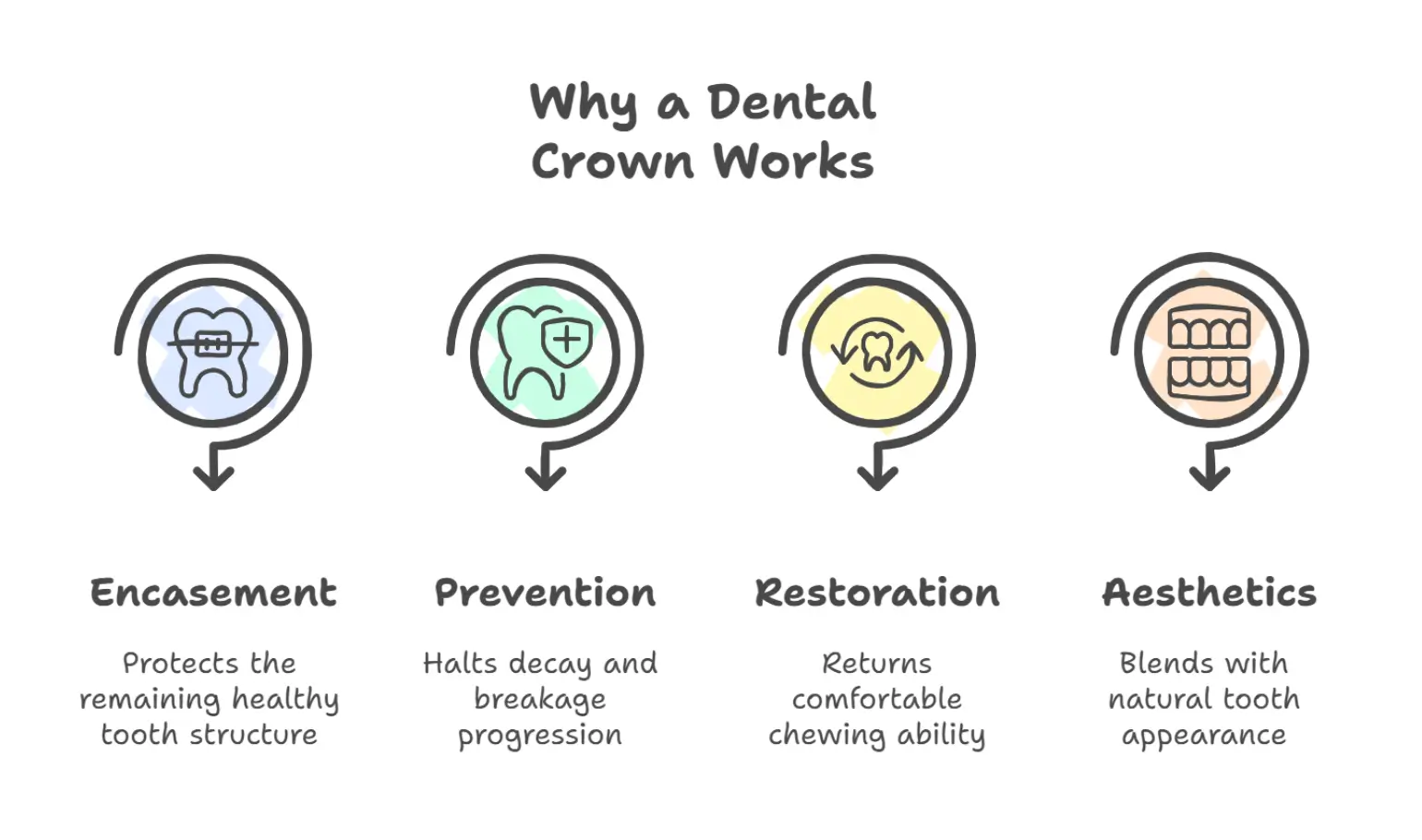
Why a Crown Works:
- Encases the remaining healthy structure
- Prevents further decay or breakage
- Restores your ability to chew comfortably
- Matches your natural tooth color and shape
Patient Pain Point: Patients often feel anxiety over tooth loss due to decay. Dental crowns provide a way to preserve the tooth while alleviating pain and sensitivity.
2. You’ve Had a Root Canal
After a root canal treatment, the tooth becomes brittle due to the removal of the pulp inside. This makes it highly susceptible to cracking or breaking under pressure.
Why You Should Get Dental Crowns Post-Treatment:
- Reinforces the tooth structure
- Seals off bacteria to prevent reinfection
- Restores full function and aesthetics
Important Note: Without a crown, a root canal-treated tooth is vulnerable. Many dentists recommend placing a crown within a few weeks of the procedure to avoid complications.
3. Your Tooth Is Cracked, Chipped, or Broken
Trauma, biting on hard food, or years of wear and tear can lead to cracked or fractured teeth. Even hairline cracks can cause significant pain and worsen over time.
When you get dental crowns for cracked teeth, you essentially bind the fractured pieces together, providing stability and eliminating discomfort.
What You Gain:
- Prevention of further cracking or tooth loss
- Relief from sharp pain during chewing or cold exposure
- Restored smile and bite alignment
Patient Pain Point: Many people with cracked teeth fear expensive treatments or extractions. Crowns offer a non-invasive way to save the tooth and avoid more extensive procedures.
4. You’re Replacing a Large or Failing Filling
Over time, large fillings can break down, leak, or fall out, especially if they were placed years ago. When more than two-thirds of the tooth is filled, it’s often too weak to hold another filling.
In such cases, getting a dental crown is the more secure, long-term solution.
How a Crown Helps:
- Covers the weakened tooth completely
- Prevents bacteria from entering gaps
- Avoids repeated dental repairs
Expert Insight: If you find yourself repeatedly repairing the same tooth, it’s time to discuss whether you should get dental crowns instead of risking repeated failure.
5. You Want to Improve the Appearance of Your Smile
Not all reasons for getting dental crowns are restorative; some are purely cosmetic. Crowns can cover teeth that are severely discolored, misshapen, or have aesthetic issues not correctable by whitening or veneers.
Cosmetic Benefits:
- Immediate transformation of your smile
- Long-lasting solution for stained or uneven teeth
- Natural-looking results, especially with ceramic or zirconia
Patient Pain Point: Some patients suffer from low self-confidence due to the appearance of their teeth. Getting dental crowns can significantly boost self-esteem and quality of life.
Bonus: Crowns for Dental Implants and Bridges
If you’re missing a tooth and choose a dental implant or bridge, the visible part, the one you use to chew and smile, is usually a dental crown.
In these cases, the crown is custom-made to match surrounding teeth, completing the restoration and returning full function to your mouth.
The Process of Getting Dental Crowns
Getting dental crowns typically takes two visits (or one, with same-day crown technology). Here’s what to expect:
First Visit:
- Examination & X-rays: To assess damage and determine suitability
- Tooth Preparation: The dentist shapes the tooth and removes any decay
- Impression: A mold is taken for the lab (or digitally scanned)
- Temporary Crown: You’ll wear this until the permanent crown is ready
Second Visit:
- Fitting the Permanent Crown: The dentist checks the fit and bite
- Bonding: The crown is cemented permanently in place
Same-day crowns (using CAD/CAM technology) can be milled and placed within hours.
Aftercare Tips for Dental Crowns
Once you get dental crowns, they can last 10-15 years or longer with proper care. Here’s how to maintain them:
- Brush and floss daily to prevent gum disease and decay under the crown
- Avoid chewing ice or hard objects to prevent cracking
- Visit your dentist every 6 months for cleanings and checkups
- Wear a night guard if you grind your teeth at night
Cost and Insurance Considerations
The cost of a dental crown can vary based on the material used and the complexity of the procedure.
Many dental insurance plans cover a portion of the price, especially if the crown is deemed medically necessary. It’s advisable to consult with your insurance provider to understand your coverage. Be sure to confirm with your provider.
When Should You Not Get a Dental Crown?
Dental crowns aren’t ideal for every situation. If a tooth is too damaged to support a crown or if there’s active gum disease, other treatments may be necessary first. Also, for minor cosmetic concerns like slight discoloration or small chips, less invasive options like veneers or bonding might be more appropriate. Your dentist will assess your unique case to determine the best solution for long-term oral health and aesthetics.
Final Thoughts: Is It Time to Get Dental Crowns?
If you’re facing any of the situations outlined, severe decay, root canal recovery, cracked teeth, worn fillings, or are looking for any dental cosmetic treatment, getting a dental crown may be the best choice for your health and confidence.
Modern crowns are highly durable, realistic, and effective at restoring oral function. Don’t ignore dental pain or postpone a recommended treatment. When you get dental crowns, you’re investing in your smile, oral health, and peace of mind.