

Dental health is more important than you may realize. Healthy teeth enhance your smile and play a crucial role in your overall well-being. They help you chew food properly, speak clearly, and feel confident in social situations. Recognizing the signs of healthy teeth is essential for maintaining good oral hygiene and preventing dental issues.
This blog will explore seven key signs indicating your teeth are strong and healthy. By understanding these signs, you can take proactive steps to ensure your dental health remains a priority, leading to a lifetime of bright smiles.
Understanding Dental Health
What is Dental Health?
Dental health refers to the overall condition of your teeth, gums, and mouth. It involves maintaining hygiene, preventing decay, and managing diseases. Good dental health impacts not just your mouth but also your overall health.
Importance of Healthy Teeth
Healthy teeth play a vital role in many aspects of life. They aid digestion by breaking down food efficiently. When your teeth function well, you can enjoy a diverse diet, leading to better nutrition.
Additionally, strong teeth enhance your confidence. A bright, attractive smile makes a positive impression. Healthy teeth also support your speech, helping you articulate clearly. Lastly, they prevent discomfort or pain that can disrupt daily life. Prioritizing your dental health allows you to enjoy these benefits fully.
The 7 Signs of Healthy and Strong Teeth
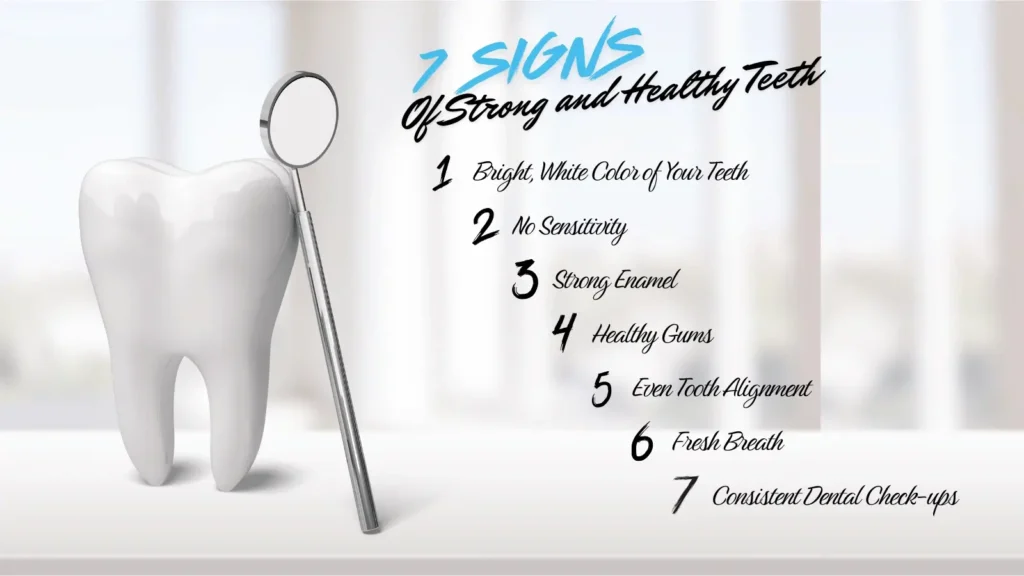
Your teeth are crucial for overall health, and recognizing the signs of healthy teeth can help you maintain a radiant smile. Below are seven key indicators that your teeth are strong and healthy.
1. Bright, White Color
A bright, white color is often one of the most visible signs of healthy teeth. While the natural color of healthy teeth can vary, they should generally appear bright and have a consistent hue. Stains or discoloration can indicate plaque buildup, cavities, or other dental issues.
When teeth are healthy, the enamel, the outer layer of the tooth, is in good condition. Enamel acts as a protective shield, and its strength contributes to the overall brightness of your teeth.
Regular brushing, flossing, and avoiding excessive consumption of staining foods—like coffee, tea, and red wine—can help maintain this brightness. Routine dental cleanings can also remove surface stains, keeping your smile vibrant.
2. No Sensitivity
Another important sign of healthy teeth is the absence of sensitivity to hot or cold temperatures. Healthy teeth should be able to withstand a variety of foods and drinks without causing pain or discomfort.
If you notice sensitivity when eating ice cream or sipping hot coffee, it could indicate that your enamel is eroded, or you may have underlying dental issues, such as cavities or gum recession.
Sensitive teeth often indicate that the nerve endings in the teeth are exposed due to weakened enamel or receding gums. If your teeth are healthy, you should enjoy various temperatures in your food and beverages without discomfort. Monitoring this sign can help you catch potential dental issues early, ensuring your teeth remain strong and healthy.
3. Strong Enamel
Strong enamel is crucial for overall dental health. Enamel is the hardest substance in the human body and is a protective barrier against decay, bacteria, and physical wear. Healthy enamel has a smooth surface, which looks appealing and makes it harder for plaque and food particles to stick.
When enamel is strong, it can resist the acids produced by bacteria that cause cavities. You may notice discoloration, roughness, or sensitivity if your enamel is compromised. Factors that can weaken enamel include excessive sugar intake, acidic foods, and poor oral hygiene.
To promote strong enamel, consider using fluoride toothpaste, which can help remineralize and strengthen it. Also, maintain a balanced diet and limit acidic foods and beverages to keep your enamel in shape.
4. Gums are Healthy
Healthy gums play a vital role in supporting strong teeth. Your gums should appear pink and firm, not swollen or bleeding. Healthy gums act as a foundation for your teeth, providing the necessary support to keep them in place. If your gums are unhealthy, you may experience issues like gum disease, which can lead to tooth loss if left untreated.
When assessing gum health, look for firmness and a lack of bleeding during brushing or flossing. If you notice any bleeding, it may indicate gingivitis, an early stage of gum disease.
Keeping your gums healthy involves regular brushing and flossing to remove plaque and routine dental check-ups. Your dentist can provide professional cleanings that help maintain gum health and prevent any potential issues from escalating.
5. Even Tooth Alignment
Properly aligned teeth contribute significantly to both dental health and function. Misaligned teeth can lead to various issues, including difficulty chewing, jaw pain, and increased wear on enamel. When your teeth are aligned correctly, they fit together well, allowing for efficient biting and chewing.
Even alignment also makes it easier to maintain oral hygiene. Crowded or misaligned teeth create tight spaces that are challenging to clean, increasing the risk of plaque buildup and cavities. You can brush and floss more effectively if your teeth are healthy and aligned.
Orthodontic treatments, like braces or clear aligners, can correct alignment issues and promote better oral health. Regular dental visits can help monitor alignment and address any concerns early on.
6. Fresh Breath
Fresh breath is a strong indicator of good dental health. Bad breath, or halitosis, often signals poor oral hygiene or underlying dental issues, such as gum disease or cavities. Healthy teeth and gums contribute to fresh breath by minimizing the bacteria that produce foul odors.
Maintaining fresh breath involves practicing good oral hygiene. Regular brushing and flossing help remove food particles and plaque, reducing the likelihood of odor-causing bacteria.
Additionally, staying hydrated and using mouthwash can further combat bad breath. Foods like crunchy fruits and vegetables can also naturally cleanse your mouth, promoting fresh breath. If you consistently experience bad breath despite good oral hygiene, it’s essential to consult your dentist, as it may indicate a more serious issue.
7. Consistent Dental Check-ups
Consistent dental check-ups are crucial for maintaining healthy teeth. Regular visits to your dentist allow for professional cleaning, which removes plaque and tartar buildup that regular brushing may miss. During these appointments, your dentist can identify potential issues early, such as cavities, gum disease, or alignment problems.
The American Dental Association recommends scheduling dental check-ups at least twice a year. These visits help ensure that your teeth remain strong and healthy over time. Your dentist can provide personalized recommendations for improving your oral hygiene routine and addressing concerns. Consistent check-ups reflect your commitment to dental health, giving you the best chance of maintaining strong teeth for a lifetime.
Tips for Maintaining Healthy Teeth
Good Oral Hygiene Practices
Maintaining healthy teeth starts with good oral hygiene. Brush your teeth twice a day with fluoride toothpaste. Do not forget to floss daily to remove food particles and plaque. Using mouthwash can also help kill bacteria. These practices help prevent cavities and gum disease.
Diet and Nutrition
Your diet greatly affects dental health. Foods rich in calcium, like dairy products, strengthen teeth. Crunchy fruits and vegetables, such as apples and carrots, help clean teeth naturally. Limit sugary snacks and drinks, as they can lead to decay. Staying hydrated and drinking water is essential for oral health.
Regular Dental Check-ups
Make regular dental check-ups a priority. Schedule appointments at least twice a year. Your dentist can spot potential issues before they become serious. Professional cleanings help maintain oral hygiene. Consistent check-ups ensure your teeth remain healthy and strong.
Recognizing the signs of healthy teeth is vital for maintaining dental health. Bright, white color, absence of sensitivity, strong enamel, healthy gums, even alignment, fresh breath, and regular dental check-ups are all indicators of strong teeth. Assess your dental health regularly and seek professional help when needed. Remember, taking care of your teeth today leads to a healthier future!