
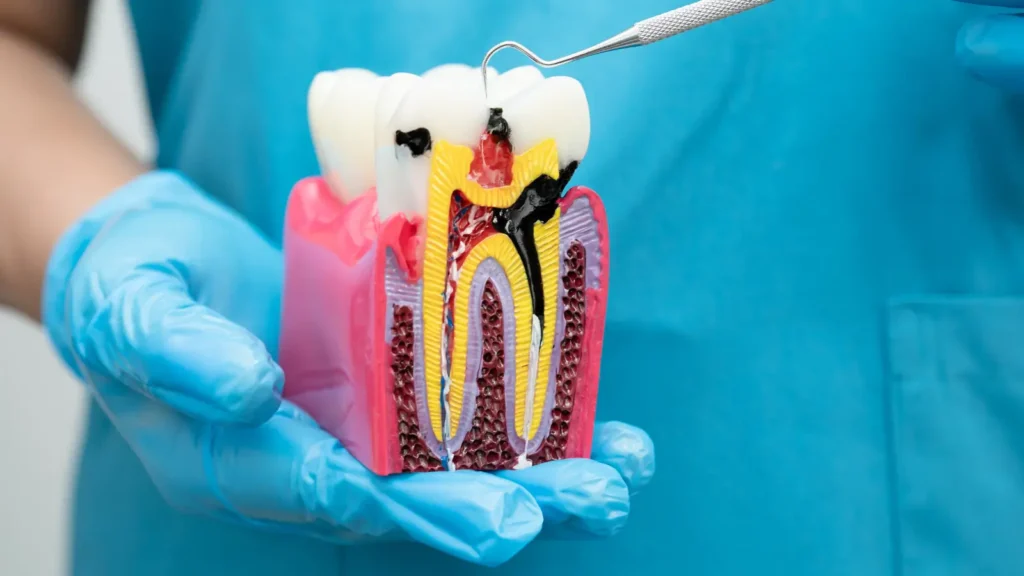
A toothache can be a nuisance, but it can also signal a more serious problem. In some cases, you might require a root canal to address the issue and preserve your tooth. But how do you know when a root canal is necessary? Let’s delve into what a root canal is, clear up some common misconceptions, and explore the signs that indicate you might need one.
What is a Root Canal, and Why is it Important?
The inner part of your tooth, beneath the enamel and dentin, is called the pulp. It contains nerves, blood vessels, and connective tissue. A root canal is a dental procedure that becomes necessary when the pulp gets inflamed or infected. This inflammation or infection can be caused by deep decay, trauma, or a cracked tooth. If left untreated, the infection can spread and cause pain, swelling, and even bone loss.
Here’s a common misconception: root canals are often feared as painful procedures. However, modern dentistry uses anesthesia to ensure minimal discomfort during the treatment. In fact, a root canal can actually alleviate existing pain caused by the infected pulp.
More importantly, a root canal treatment is crucial for saving your natural tooth. Natural teeth are better for chewing, biting, and overall oral health compared to replacements like bridges or implants.
Signs and Symptoms Indicating You Might Need a Root Canal
If you’re experiencing any of the following signs, it’s wise to schedule a dental appointment to get checked for a possible root canal need:
- Persistent toothache: This is a common sign of an inflamed or infected pulp. The pain may be constant or throbbing and can worsen at night.
- Sensitivity to hot or cold temperatures: Does biting down on ice cream or sipping hot coffee cause lingering discomfort in a specific tooth? This sensitivity can indicate pulp irritation.
- Swollen or tender gums: The gums around the affected tooth may become red, swollen, and tender to the touch. This is a sign of inflammation or infection spreading beyond the tooth itself.
What Causes a Root Canal Infection?
There are three main culprits behind a root canal infection:
- Deep tooth decay: If cavities aren’t addressed promptly, decay can reach the pulp, causing inflammation and infection.
- Trauma to the tooth: A blow to the mouth can damage the pulp, even if the tooth doesn’t crack or chip.
- Cracked or chipped tooth: A crack or chip in the tooth can provide an entry point for bacteria to reach the pulp, leading to infection.
Diagnosis and Treatment of a Root Canal
During a dental visit, your dentist will examine your teeth, ask about your symptoms, and likely take X-rays to assess the condition of the tooth and its roots. If a root canal is deemed necessary, the procedure typically involves the following steps:
- X-rays and examination: X-rays provide a detailed view of the tooth’s interior and surrounding bone.
- Anesthesia: Local anesthesia numbs the area around the tooth to minimize discomfort during the procedure.
- Accessing the pulp: The dentist will create a small opening in the crown of the tooth to access the pulp.
- Removing the pulp: Inflamed or infected pulp tissue is carefully removed.
- Cleaning and disinfecting: The root canals inside the tooth are thoroughly cleaned and disinfected to eliminate bacteria.
- Filling and sealing: The canals are filled with a special material to prevent reinfection. In some cases, a temporary filling might be placed on the crown initially.
- Crown or permanent filling: A permanent crown or filling is usually placed on the tooth during a subsequent visit to restore its strength and function.
Preventing the Need for a Root Canal and Aftercare Tips
Here’s how you can minimize your chances of needing a root canal:
- Maintain good oral hygiene: Brushing twice daily, flossing once a day, and using a mouthwash can significantly reduce your risk of cavities and gum disease.
- Regular dental check-ups: Schedule regular dental checkups and cleanings for early detection and treatment of any potential problems.
- Prompt treatment of cavities: Don’t delay treatment for cavities. Addressing them early prevents them from reaching the pulp.
Following your root canal treatment, your dentist will provide specific aftercare instructions. Typically, these involve:
- Pain management: Over-the-counter pain medication can help manage any post-procedural discomfort.
- Dietary restrictions: You might be advised to avoid very hard or chewy foods for a while.
- Maintaining oral hygiene: Continue brushing and flossing gently around the treated tooth.
If you experience any unusual swelling, prolonged pain, or other concerning symptoms after your root canal, contact your dentist promptly.
Conclusion
In conclusion, understanding the signs and causes of needing a root canal can help prevent severe oral health issues. It is crucial to seek treatment promptly to save the affected tooth and alleviate pain. By following preventive measures and practicing proper aftercare, you can maintain a healthy smile for years to come.
FAQs On When Do You Need a Root Canal
A filling is used to repair minor tooth decay, while a root canal treats infection or damage to the tooth’s pulp.
With modern techniques and anesthesia, most patients report minimal discomfort during a root canal.
Recovery time varies but typically, patients can resume normal activities immediately after the procedure.