

Dental veneers are a popular cosmetic dentistry option for achieving a perfect smile. These thin, custom-made shells are bonded to the front surface of teeth to improve their appearance. While veneers are typically safe, there’s a small risk of infection, especially if proper care isn’t taken. In this blog post, we’ll explore what to do if you suspect an infection after getting dental veneers and how to prevent them in the first place.
Signs of Infection After Dental Veneers
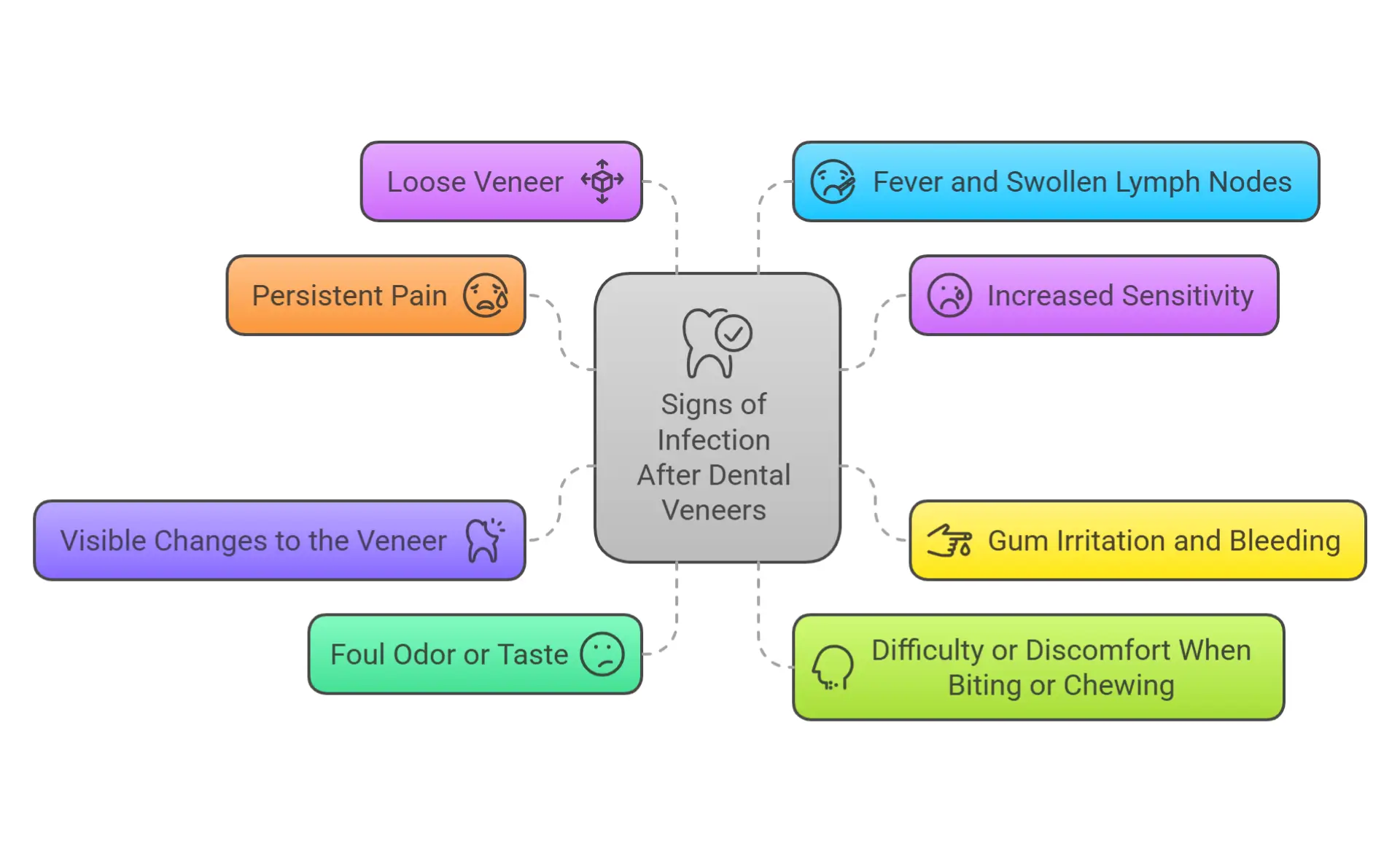
Persistent Pain:
While some discomfort is normal after getting dental veneers, persistent or increasing pain could be a sign of an underlying issue. If the pain is severe or doesn’t improve with time, it’s important to consult your dentist.
Increased Sensitivity to Hot or Cold:
If you notice heightened sensitivity in the tooth with the veneer, especially to hot or cold temperatures, it could indicate an infection. This sensitivity may be accompanied by pain or discomfort.
Gum Irritation and Bleeding:
Infections around dental veneers can cause gum irritation and bleeding. You may notice redness, swelling, or tenderness in the gum tissue surrounding the affected tooth.
Visible Changes to the Veneer:
An infected veneer may appear discolored or damaged. You may notice changes in the shape or texture of the veneer, indicating a problem underneath.
Foul Odor or Taste:
In some cases, an infected veneer can cause a foul odor or taste in your mouth. This is often a sign of bacterial growth and should be addressed promptly.
Difficulty or Discomfort When Biting or Chewing:
An infected veneer can cause discomfort or pain when biting or chewing, especially if there is pressure on the affected tooth. This can impact your ability to eat comfortably.
Loose Veneer:
Infections can weaken the bond between the veneer and the tooth, leading to a loose or shifting veneer. If you notice any movement in your veneer, it’s important to seek dental attention.
Fever and Swollen Lymph Nodes:
In severe cases, an infection around a dental veneer can lead to systemic symptoms such as fever and swollen lymph nodes. If you experience these symptoms along with other signs of infection, seek immediate medical attention.
What to Do If You Suspect an Infection
- Contact Your Dentist Immediately: If you suspect an infection after getting dental veneers, don’t wait to seek help. Contact your dentist immediately to schedule an appointment. Explain your symptoms and follow their advice closely.
- Avoid Delaying Treatment: Dental infections can worsen if left untreated. Early intervention can prevent the infection from spreading and causing further damage to your teeth and gums.
- Follow Your Dentist’s Recommendations: Your dentist may recommend antibiotics to treat the infection. It’s important to take the medication as prescribed and follow any other instructions given by your dentist.
- Attend Follow-up Appointments: Your dentist may want to monitor your progress after starting treatment. Attend all follow-up appointments to ensure the infection is fully resolved.
- Practice Good Oral Hygiene: Continue to brush and floss regularly to prevent further infections. Your dentist may also recommend a special mouthwash to help kill bacteria.
- Avoid Irritating the Area: Try to avoid chewing on the affected side of your mouth and avoid foods that are hard or crunchy, as they can irritate the area.
- Use Pain Relief if Needed: If you’re experiencing pain, you can take over-the-counter pain relievers as recommended by your dentist. Avoid aspirin, as it can increase bleeding.
- Monitor Your Symptoms: Keep an eye on your symptoms and report any changes or new symptoms to your dentist.
- Avoid Smoking and Alcohol: Smoking and alcohol can delay healing and increase the risk of complications. Try to avoid these until your infection has fully resolved.
- Use a Tongue Scraper: Cleaning your tongue with a tongue scraper can help remove bacteria that can cause infections around your veneers.
- Stay Hydrated: Drinking plenty of water can help maintain saliva flow, which is essential for washing away food particles and bacteria that can cause infections.
- Consider Fluoride Treatments: Your dentist may recommend fluoride treatments to strengthen your teeth and reduce the risk of decay, which can lead to infections around your veneers.
Conclusion
Infections after dental veneers are uncommon, but it’s essential to recognize the signs and take prompt action if you suspect a problem. By maintaining good oral hygiene, choosing a qualified dentist, and following post-procedure care instructions, you can significantly reduce the risk of infections. If you do experience symptoms of an infection, such as pain, sensitivity, or swelling, contact your dentist in Charlotte, NC immediately for proper evaluation and treatment. If you have any concerns about your dental veneers or oral health, don’t hesitate to consult your dentist. Your smile is worth protecting!