

It’s never fun to have tooth decay, but it can be particularly difficult when it develops near the gum line. You may see a tiny notch at the bottom of your tooth, mild sensitivity eating or drinking, or even some gum irritation. This kind of decay, known as root caries or cervical decay, occurs when the coating of enamel — the protective layer of hard material that covers your teeth — becomes eroded, exposing the softer inner layers of your tooth.
If left untreated, this decay can lead to more serious dental problems, including infections, gum disease, and even tooth loss. But don’t worry—there are ways to treat and prevent it. In this guide, we’ll break down everything you need to know about tooth decay at the gum line, from what causes it to the best ways to stop it in its tracks.
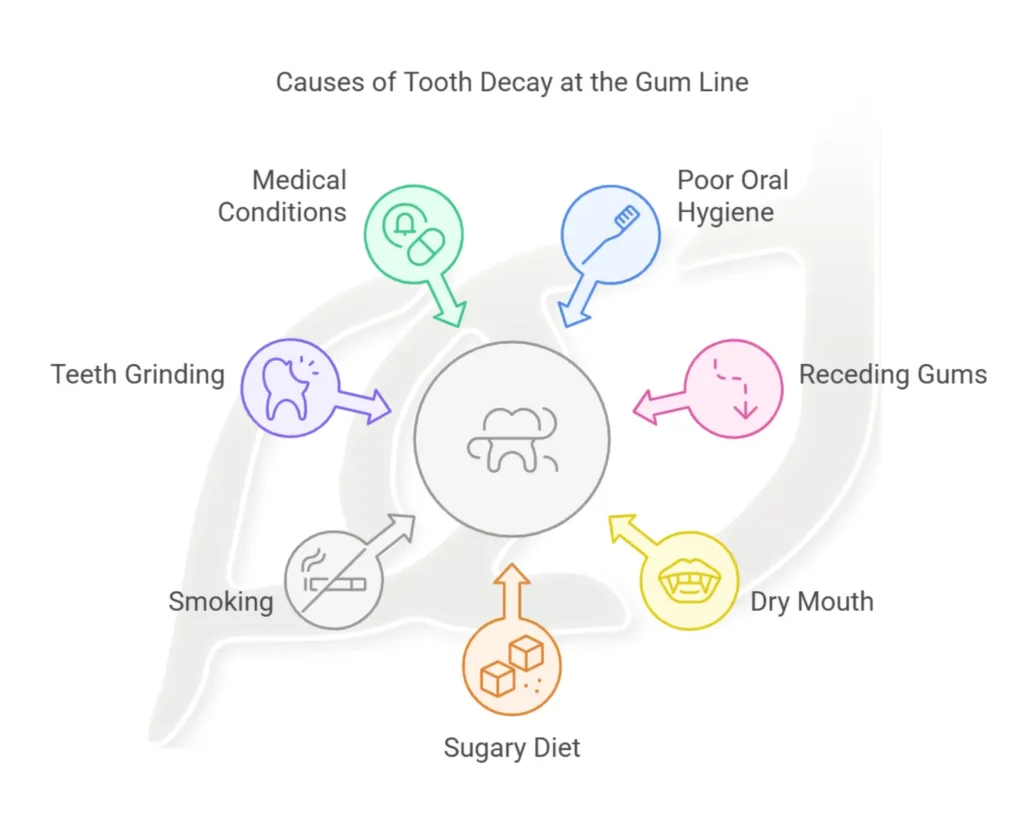
What Causes Tooth Decay at the Gum Line?
Tooth decay near the gum line develops for several reasons. Understanding these causes can help you take better care of your teeth and avoid future problems.
1. Poor Oral Hygiene
Not brushing and flossing properly allows plaque and bacteria to accumulate at the gum line. Over time, this buildup turns into tartar, which leads to decay.
2. Receding Gums
Gum recession, often caused by aggressive brushing, aging, or gum disease, exposes the root of the tooth. Unlike enamel, which is strong, the root surface (called dentin) is much softer and more prone to decay.
3. Dry Mouth (Xerostomia)
Saliva helps wash away food particles and neutralize acids in your mouth. A dry mouth increases the risk of cavities, especially along the gum line, because there’s less saliva to protect the teeth. Dry mouth can be caused by medications, dehydration, or certain medical conditions.
4. Diet High in Sugars and Acids
Frequent consumption of sugary and acidic foods weakens tooth enamel. Sodas, fruit juices, candies, and even some starchy foods can contribute to gum line decay if they stick to your teeth.
5. Smoking and Tobacco Use
Smoking weakens your immune system and makes it harder for your gums to fight off infections. Tobacco use also reduces saliva production, increasing the risk of gum disease and decay.
6. Teeth Grinding (Bruxism)
Grinding your teeth can wear down enamel and expose the sensitive dentin underneath. If your gum line is already weak, grinding can make the problem worse.
7. Medical Conditions and Medications
Certain conditions, like diabetes and acid reflux, can contribute to tooth decay. Some medications, such as antihistamines, antidepressants, and blood pressure drugs, can cause dry mouth, leading to an increased risk of cavities.
Signs and Symptoms of Gum Line Decay
How do you know if you have tooth decay at the gum line? Here are some common signs to look out for:
- Tooth sensitivity – A sharp or dull ache when eating hot, cold, or sweet foods.
- Visible discoloration – A brown, black, or white spot near the base of your tooth.
- Notch or groove at the gum line – You might notice a small indentation where the decay has begun.
- Gum tenderness or irritation – The gums around the affected tooth may appear red or swollen.
- Bad breath (halitosis) – Decay produces bacteria that cause a persistent bad smell in your mouth.
- Loose teeth – If decay progresses deep enough, it can weaken the tooth’s structure and cause it to become loose.
The earlier you spot these symptoms, the easier it is to treat the decay before it worsens.
How to Treat Tooth Decay at the Gum Line
Once you have gum line decay, it’s crucial to seek treatment as soon as possible. The right treatment depends on how advanced the decay is.
1. Fluoride Treatments (For Early Decay)
If caught early, decay at the gum line can sometimes be reversed with fluoride. Fluoride strengthens weakened enamel and helps fight bacteria. Dentists may recommend:
- Prescription fluoride toothpaste
- Fluoride varnishes or gels
- Professional fluoride treatments
2. Dental Fillings (For Mild to Moderate Decay)
If the decay has created a cavity, your dentist will need to remove the damaged part and fill it with a material such as:
- Composite resin – A tooth-colored material that blends in naturally.
- Glass ionomer – Releases fluoride to help prevent further decay.
- Silver amalgam – Durable but more noticeable than other options.
3. Dental Crowns (For Severe Decay)
If the decay is extensive and weakens the tooth, a crown may be needed to protect it. The dentist will remove the damaged area and cover the tooth with a cap made of porcelain, ceramic, or metal.
4. Root Canal (For Advanced Decay and Infection)
If the decay reaches the inner pulp of the tooth, a root canal may be necessary to remove infected tissue and prevent further damage. This root canal treatment helps save the tooth instead of extracting it.
5. Gum Grafting (For Receding Gums)
If gum recession is contributing to decay, a gum graft might be recommended. This procedure involves taking healthy gum tissue from another part of your mouth and attaching it to the receding area to cover exposed roots.
6. Tooth Extraction (Last Resort)
If the tooth is beyond saving, the dentist may need to remove it. In such cases, options like dental implants or bridges can replace the missing tooth.
How to Prevent Tooth Decay at the Gum Line
The best way to deal with gum line decay is to prevent it in the first place. Here are some practical tips:
1. Brush Properly Twice a Day
- Use a soft-bristled toothbrush to avoid damaging your gums.
- Brush for at least two minutes in gentle, circular motions.
- Pay extra attention to the area where your teeth meet your gums.
2. Floss Daily
Flossing removes plaque and food particles from hard-to-reach areas. If traditional flossing is difficult, try using a water flosser or floss picks.
3. Use a Fluoride Mouthwash
Rinsing with fluoride mouthwash helps strengthen enamel and wash away bacteria.
4. Stay Hydrated
Drink plenty of water to maintain saliva production and keep your mouth clean.
5. Avoid Sugary and Acidic Foods
Limit candies, soda, and citrus fruits. If you consume them, rinse your mouth with water afterward.
6. Quit Smoking and Tobacco Use
Tobacco contributes to gum disease and dry mouth, increasing your risk of decay.
7. Visit Your Dentist Regularly
Routine checkups (every 6 months) help catch and treat early signs of decay before they worsen.
8. Address Grinding Issues
If you grind your teeth at night, ask your dentist about a nightguard to protect your enamel.
Final Thoughts
Tooth decay at the gum line might seem like a small issue at first, but it can quickly turn into a bigger problem if ignored. By understanding the causes and symptoms, you can take proactive steps to keep your teeth and gums healthy.
If you suspect you have gum line decay, don’t wait—schedule a dental visit as soon as possible. The sooner you address the problem, the easier and less costly the treatment will be.
Taking care of your teeth doesn’t have to be complicated. With good oral hygiene, smart dietary choices, and regular dental checkups, you can keep your smile strong and cavity-free for years to come!