A clear, step-by-step look at the Invisalign journey, from your first scan to your final reveal, so you can start treatment with confidence.
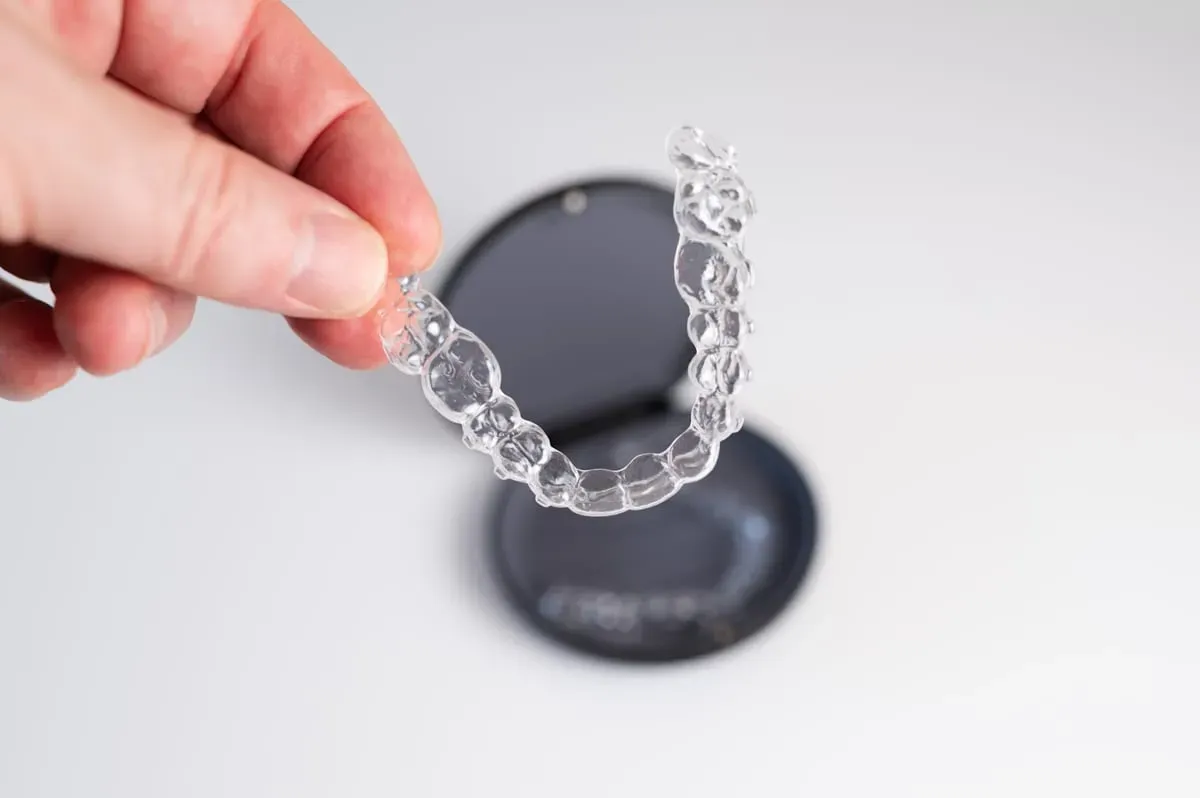
If you have spent any time googling crooked teeth or gaps you would like closed, chances are "Invisalign" has already crossed your screen more than once. It is one of the most searched orthodontic terms in the country, and for good reason: it offers a way to straighten teeth without a mouth full of metal. But searching for information and actually knowing what the treatment involves are two different things, and most patients who walk through our doors in Charlotte have a handful of the same honest questions.
How long will I really need to wear these? Will people notice them? What happens if I lose one? These are practical concerns, and they deserve practical answers rather than marketing promises. Our team at Promenade Center for Dentistry has guided patients of every age, from teenagers to busy professionals, through the entire Invisalign process, and we have a clear sense of what tends to surprise people, what reassures them, and what they wish they had known on day one.
This article walks through the full experience step by step, from your very first consultation to the retention phase after your last aligner, so you can go into treatment with realistic expectations and a clear picture of what your day-to-day life will actually look like.
Your first appointment is less about treatment and more about information gathering. We take digital scans of your teeth using an intraoral scanner, which creates a detailed 3D model without the need for the messy impression trays dentistry used for decades. Along with those scans, we review your bite, check for any gum or decay issues that should be addressed first, and talk through what you want your smile to look like at the end of the process.
From there, the digital model is used to map out a full treatment plan, often visualized as a simulation showing how your teeth are projected to move, month by month. This is one of the more satisfying parts of starting Invisalign: you get to see a preview of your results before a single aligner is made. If the plan looks right to you, your custom aligner series is manufactured and shipped to our Charlotte office, usually arriving within a couple of weeks.
Not everyone is a straightforward candidate right out of the gate. Patients with more complex bite issues, significant crowding, or certain restorative needs may be better served by exploring cosmetic dentistry options alongside orthodontic treatment, or may need a slightly different approach. That is exactly why the consultation exists: to make sure the plan we build actually fits your mouth and your goals.
This is where a lot of the uncertainty around Invisalign gets resolved, because the daily routine is simpler than people expect. You wear each set of aligners for roughly 20 to 22 hours a day, removing them only to eat, drink anything other than water, and brush and floss. Most patients fall into a rhythm within the first week or two, treating the aligners almost like a retainer they barely think about anymore.
The trays themselves are made of a smooth, clear medical-grade plastic that most people do not notice at conversational distance. You will swap to a new set in the series every one to two weeks, following the schedule we set at your consultation, with each new tray applying a slightly different amount of pressure to continue shifting your teeth toward their final position.
One of the more common misconceptions is that Invisalign always works faster than braces. In reality, the timeline depends far more on the complexity of your case than on which appliance is used. Minor crowding or small gaps might be resolved in as little as six months, while more involved bite corrections can take 18 months or longer. For most adult patients we see, treatment length falls somewhere between 12 and 18 months.
Age matters less than people assume. Clear aligners work well for teenagers whose adult teeth have fully erupted, and we offer specific guidance for Invisalign for teens, just as they work well for adults revisiting orthodontic treatment they skipped years ago through our Invisalign for adults program. The biggest variable is almost always compliance: patients who wear their aligners consistently for the full recommended hours each day tend to finish on schedule, while inconsistent wear can stretch the timeline out noticeably.
If you are also weighing cost against timeline, it helps to get specific numbers rather than estimates pulled from the internet, since pricing varies based on case complexity and the number of aligner trays required. We go over this in detail during your consultation and have more background available on Invisalign costs so you can plan accordingly.
Most patients describe mild pressure or tightness for the first couple of days after switching to a new aligner, which is simply a sign that the tray is doing its job. This is usually far less intense than the soreness associated with tightening traditional braces, and it typically fades within 48 to 72 hours as your teeth adjust to the new position.
Occasionally, a sharp edge on an aligner can irritate the inside of your cheek or lip, especially toward the end of a two-week cycle. We can smooth these spots in office, and a small dab of orthodontic wax works as a temporary fix in the meantime. Some patients also develop small attachments, which are tooth-colored bumps bonded to certain teeth that give the aligner extra grip for more precise movements. These are completely normal and are removed at the end of treatment.
Lost or cracked aligners happen, usually from leaving one wrapped in a napkin at a restaurant. If this happens to you, call our office rather than skipping ahead to the next tray on your own, since moving forward without the right support can shift your bite off plan. We will guide you on whether to wear your previous tray a bit longer or move to the next set early while a replacement is ordered.
Unlike braces, Invisalign does not require monthly tightening visits, but regular checkups still matter. Typically every six to eight weeks, you will come in so we can verify your teeth are tracking with the digital plan, check the fit of your current trays, and hand off several sets of aligners at once so you are not making constant trips to the office.
These visits are short, usually 15 to 20 minutes, and are a good opportunity to flag anything that feels off, whether that is a tray that seems loose before its two-week mark or a tooth that seems to be moving slower than the simulation predicted. Minor tracking issues are common and are usually corrected with a short series of refinement aligners near the end of treatment, which is a normal part of the process rather than a sign something went wrong.
We also use these checkups to keep an eye on your general oral health. Because you are in the office regularly anyway, it is efficient to combine your aligner check with your routine dental cleanings and exams, so you are not splitting your orthodontic care and your preventive care into entirely separate schedules.
Finishing your final tray is genuinely exciting, but it is not quite the end of the story. Teeth have a natural tendency to drift back toward their original positions, a process called relapse, which is why retainers are non-negotiable after active treatment. Most patients receive a custom clear retainer that mirrors the comfort of their aligners and are asked to wear it nightly, with wear time gradually tapering as your bite stabilizes over the following year.
This is also a natural point where some patients choose to address cosmetic details that straightening alone does not fix, such as staining or small chips, through options like teeth whitening or dental bonding. Straight teeth tend to make these finishing touches more noticeable and more satisfying, since the whole smile now reads as aligned and intentional.
If you clench or grind your teeth at night, we may also talk with you about a dedicated night guard to protect your new alignment, since grinding forces can undo some of the progress your aligners achieved. It is a small addition that protects a result you worked months to achieve.
Key Takeaways
Most patients report milder discomfort than with braces. You may feel pressure or tightness for a day or two after starting a new tray, but there are no wires or brackets to irritate your cheeks and no tightening appointments that cause a spike in soreness.
Yes, since the aligners are removable. Take them out before eating or drinking anything besides water, then brush or rinse before putting them back in to avoid trapping food particles or staining the plastic.
A single missed day usually will not derail your progress, but repeated inconsistency can slow movement and extend your overall timeline. If you fall behind, call our office rather than guessing, so we can adjust your schedule if needed.
Invisalign handles a wide range of cases, from mild crowding to more moderate bite misalignment, but every case is different. We review your scans and history personally to confirm candidacy, and you can find more background on common questions in our Invisalign FAQs.
General guidelines include having all adult teeth present and no untreated gum disease or significant decay, but the only reliable answer comes from an exam. Our general dentistry team can evaluate your current oral health alongside your orthodontic goals at the same visit.
Knowing what to expect takes a lot of the hesitation out of starting orthodontic treatment. Invisalign asks for consistency, a bit of patience during the first few days of each new tray, and regular checkups, but in exchange, it offers a straightening process that fits into a normal, busy life without announcing itself at every meeting or dinner.
Every mouth has its own history and its own goals, which is exactly why the process starts with a real conversation rather than a one-size-fits-all plan. Our Charlotte team at Promenade Center for Dentistry is glad to walk through your scans, your timeline, and your questions in person, so you can move forward with a plan built around your specific smile.
Interested in the topics discussed in this guide? Explore our specialized treatments and services.
 Service
Veneers, whitening, bonding, and full smile makeovers tailored to your face and goals, delivered with careful planning and honest guidance.
 Service
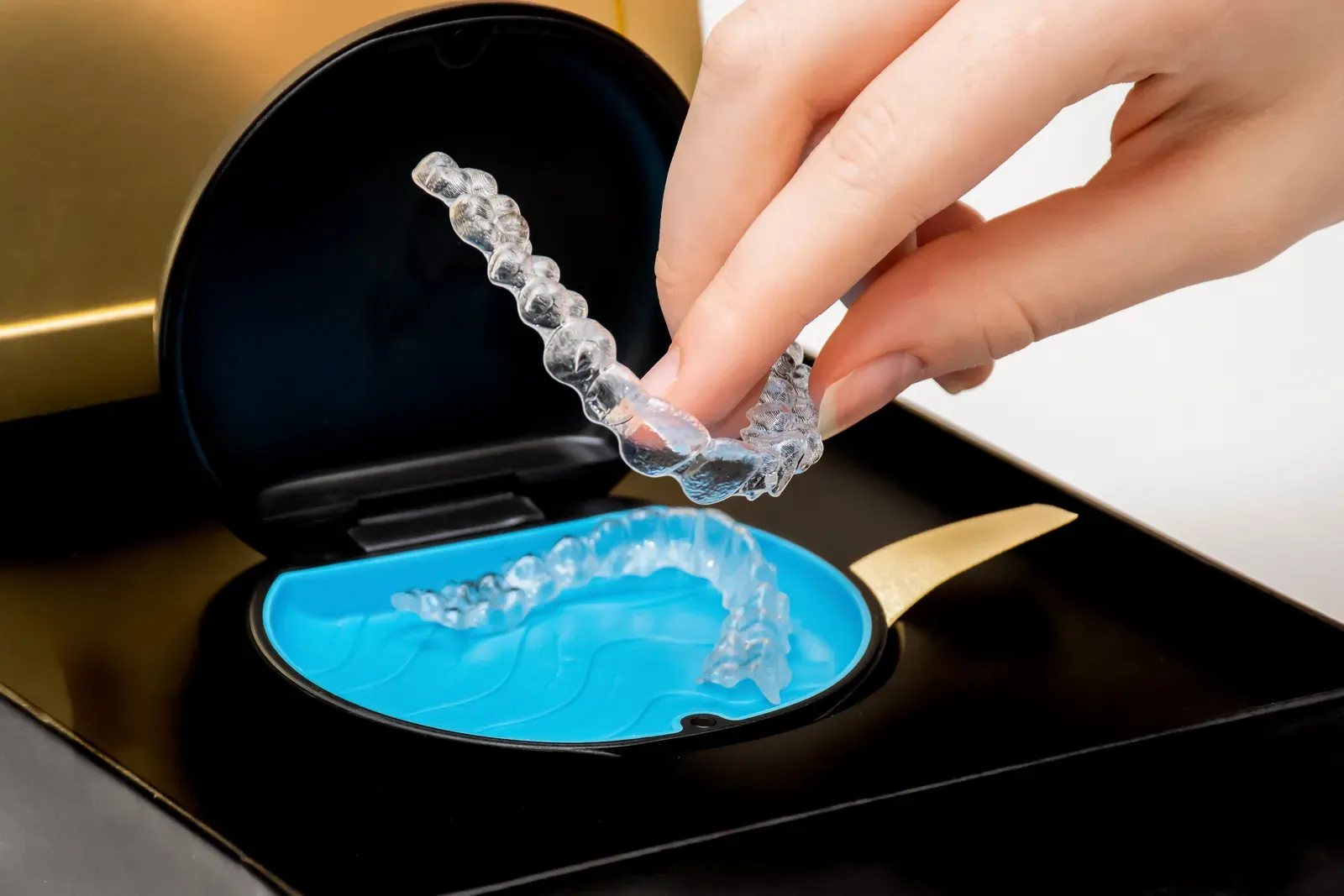
Discover how Invisalign clear aligners from Promenade Center for Dentistry help Charlotte patients achieve a straighter smile without metal brackets or wires.
Promenade Center for Dentistry
Our caring team is ready to welcome you with gentle, personalized dental care. Book online or give us a call - we'd love to see you smile.